
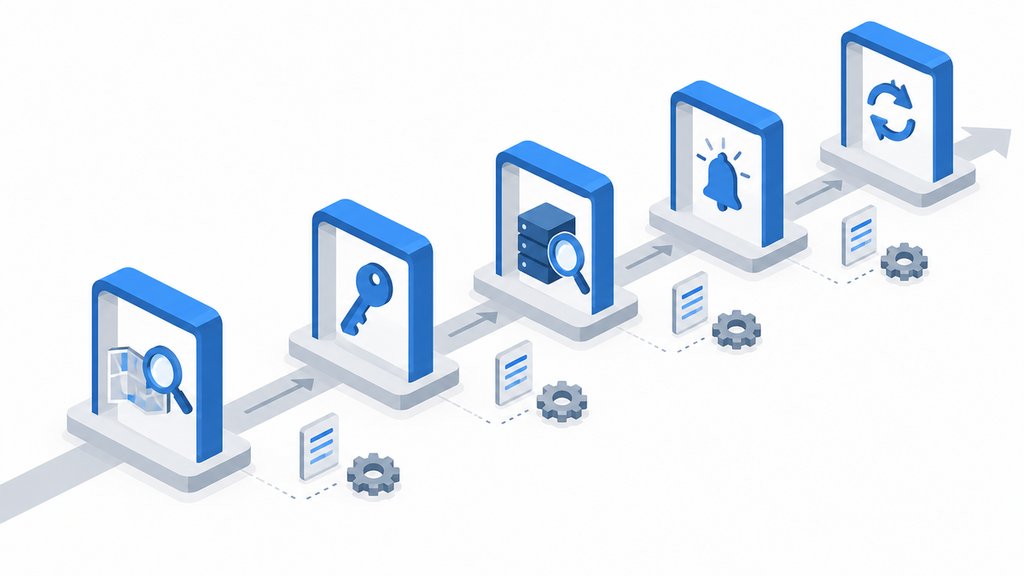
Starting an IT project without a clear plan is one of the fastest ways to burn budget, miss deadlines, and leave your Denton business with systems that create more problems than they solve. Whether you are migrating to cloud services, upgrading network infrastructure, or deploying new business applications, solid IT project management separates successful rollouts from expensive do-overs.
Denton businesses operate under specific information-security expectations that shape how IT projects should be scoped, executed, and handed off. This article breaks down the foundational requirements every local business should understand before work begins, and how to evaluate project management partners who can deliver on time, on budget, and in compliance with city standards.
Key Takeaways
- Risk assessment is mandatory for new IT projects, technologies, and major operating-environment changes under Denton’s information-security policy.
- Every hardware and software asset must have an assigned business unit or individual owner before a project closes.
- Vulnerability scanning is required before systems enter production and at recurring intervals afterward.
- Incident-response planning must cover detection, analysis, containment, eradication, and recovery, with a 15-minute reporting window for suspected security incidents.
Why IT Project Management Matters for Denton Businesses
Poorly managed IT projects drain resources through scope creep, missed security steps, and handoffs that leave no one accountable for the result. For small and mid-size businesses in Denton, TX, these failures hit harder because internal IT staff are often stretched thin or nonexistent.
A structured project management approach keeps timelines realistic, budgets predictable, and outcomes aligned with both business goals and local security requirements. The difference between a project that finishes clean and one that needs emergency remediation usually comes down to planning discipline before the first cable is pulled or server is configured.
IT Project Management Readiness Checklist for Denton Businesses
- ✓Risk assessment completed for project scope and technology changes: Required
- ✓Hardware and software assets assigned to named owners: Required
- ✓Pre-production vulnerability scan completed with findings remediated: Required
- ✓Recurring vulnerability scan schedule established: Required
- ✓Incident-response plan covers detection, analysis, containment, eradication, recovery: Required
- ✓Personnel trained on 15-minute incident reporting procedure: Required
- ✓Business continuity plan includes backup and redundancy measures: Required
- ✓Project handoff documentation delivered to asset owners: Required
- ✓Post-project managed support agreement in place: Recommended
- ✓Flat per-user pricing confirmed before work begins: Recommended
Requirements based on Denton information-security policy and incident-response procedures.
Project Risk Assessment as a Mandatory First Step
Denton’s information-security policy identifies risk assessments as a requirement for new IT projects, technologies, and major changes to the operating environment. City of Denton.
This means businesses cannot treat risk evaluation as optional paperwork; it is a formal gate that must be cleared before work proceeds.
A proper risk assessment identifies threats to confidentiality, integrity, and availability, then maps controls to each risk. For a typical Denton office, this might mean evaluating whether a new cloud migration exposes patient records, financial data, or municipal information to unauthorized access.
The assessment should document who owns each risk, what mitigation steps are planned, and how residual risk will be monitored after go-live. Skipping this step does not eliminate risk; it simply transfers it to the operational phase, where incidents are more expensive and more visible.
Asset Ownership and Accountability in IT Projects
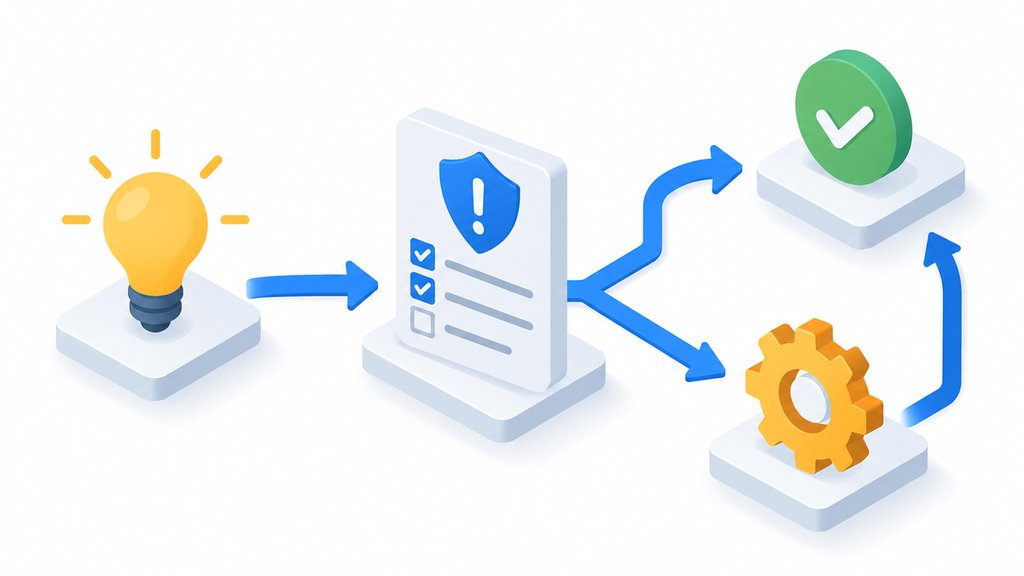
IT projects create and modify technology assets, and every hardware and software asset must be assigned to a business unit or individual owner. City of Denton.
Without clear ownership, no one is responsible for patching, licensing renewals, access reviews, or eventual decommissioning.
Accountable ownership should be established during project planning, not after deployment. For example, if a Denton law firm deploys a new document management system, the project plan should name a specific partner or office manager as the system owner.
That owner receives the handoff documentation, approves user access changes, and coordinates with IT support for upgrades or troubleshooting. Clear ownership prevents the common post-project drift where systems run unmaintained until they fail or fall out of compliance.
Pre-Production Security and Ongoing Vulnerability Management
A Denton-specific security standard calls for vulnerability scanning before systems enter production and at recurring intervals afterward. City of Denton.
This requirement applies whether the project involves a public-facing web application, an internal database, or network infrastructure changes.
Pre-production scanning catches misconfigurations, missing patches, and exposed services before attackers can find them. It is far cheaper to remediate a vulnerability in staging than to respond to a breach in production.
Recurring scans after go-live account for new vulnerabilities discovered in the software supply chain and configuration drift that happens during normal operations. The project management plan should specify scan frequency, who reviews results, and how findings are tracked to resolution.

Incident Response Planning for Every IT Project
IT projects should include an incident-response capability covering the full incident-handling lifecycle. City of Denton.
This means planning for detection, analysis, containment, eradication, and recovery before the project delivers any production system.
Detection requires logging and monitoring tools configured to the new environment. Analysis needs trained personnel who understand the system’s normal behavior well enough to spot anomalies.
Containment and eradication depend on network segmentation and access controls built during the project, not improvised during a crisis.
Recovery planning ensures backups are tested, restoration procedures are documented, and communication plans include internal stakeholders and any affected external parties. A project that delivers a system without incident-response readiness is incomplete by local security standards.
Business Continuity and the 15-Minute Incident Reporting Window
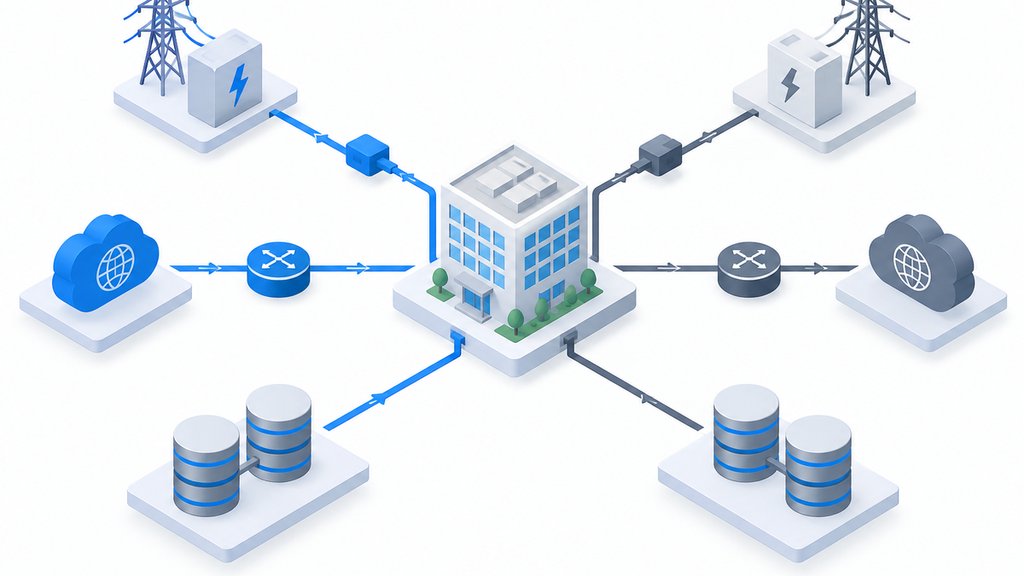
Denton’s information-security strategy identifies backup data-center redundancy and a business-continuity plan as protective measures. City of Denton.
IT projects should build continuity into architecture decisions from the start, not bolt it on after a failure.
This means designing for redundancy in network paths, power, and data storage. It also means documenting how the business operates during partial or full system outages, and how quickly critical functions must be restored.
Projects must make reporting channels clear and accessible, with escalation paths that do not depend on a single individual being available.
How The Local Circuit Approaches IT Project Management for Denton Businesses
The Local Circuit has operated out of Denton, TX since 2010, with an all-Texas team that handles every project in-house. You get a familiar face on-site and a direct line to the people who built your network, rather than a rotating cast of subcontractors.
Our IT project management services include upfront scoping, risk assessment, asset ownership assignment, pre-production security validation, and full incident-response planning that aligns with Denton’s information-security expectations. We stay on as a managed IT partner after installation, so the same team that planned your network also monitors IT, supports your staff, and handles help desk tickets and Microsoft 365.
For businesses that want ongoing support after the project closes, Managed IT Services Denton TX provides flat-rate monitoring, help desk, and security management from the same team that handled the build.
Pricing is flat and per-user, not hourly, so you know your cost before work starts instead of after. For over 15 years we have worked alongside small businesses as their technology partner, providing on-site, remote, and in-house services at a fraction of the cost to keep a full-time IT staff.
Every network cabling project includes a free on-site assessment to map drops, identify existing cable worth keeping, and produce a written scope of work that you approve before any cable is pulled.
Local Compliance and Regulatory Alignment for Denton IT Projects
Denton businesses must navigate Texas-specific data privacy laws and industry regulations before launching any technology initiative. Understanding which frameworks apply to your sector prevents costly rework and legal exposure down the line.
Healthcare providers in Denton need HIPAA-aligned project controls from day one. Financial services firms face GLBA and Texas Finance Code requirements that shape how systems store and transmit client information.
State breach notification laws mandate specific timelines and procedures that should be embedded into project documentation. Your IT project plan should map every data touchpoint to the relevant regulatory obligation before development begins.
Educational institutions and nonprofits operating in Denton encounter unique compliance landscapes involving FERPA or grant-funded technology restrictions. These constraints influence vendor selection, cloud hosting decisions, and user access architectures.
Working with a local IT project management partner ensures awareness of Denton County and North Texas regional requirements that national providers often overlook. This geographic familiarity reduces the gap between generic templates and actionable compliance steps.
Documentation practices must satisfy both regulatory auditors and internal stakeholders who inherit systems after project completion. Clear, maintained records transform compliance from a project-phase checkbox into an operational standard.
Regular compliance reviews scheduled within the project lifecycle catch drift before deployment. This proactive rhythm protects Denton businesses from the penalties and reputational damage that follow post-launch violations.

Frequently Asked Questions
What is the first step in any IT project for a Denton business?
The first step is a formal risk assessment that identifies threats to your data and operations, then maps controls to each risk. Denton’s information-security policy requires this assessment for new projects, technologies, and major operating-environment changes before work proceeds.
Who should own the technology assets created during an IT project?
Every hardware and software asset must be assigned to a specific business unit or individual owner before the project closes. This owner receives documentation, approves access changes, and coordinates maintenance, ensuring nothing falls through the cracks after handoff.
When should vulnerability scanning happen for new systems?
Vulnerability scanning is required before systems enter production and at recurring intervals afterward. Pre-production scanning catches misconfigurations early, while ongoing scans address new vulnerabilities and configuration drift that occur during normal operations.
What does incident-response planning need to cover?
Incident-response planning must address the full lifecycle: detection, analysis, containment, eradication, and recovery. The plan should specify tools, trained personnel, access controls, tested backups, and communication procedures that meet Denton’s 15-minute reporting expectation for suspected security incidents.
How does flat per-user pricing compare to hourly IT project billing?
Flat per-user pricing gives you a fixed cost before work begins, which makes budgeting predictable and eliminates surprise invoices. Hourly billing can escalate quickly when projects encounter unexpected complexity, leaving you to absorb the overage.
What areas does The Local Circuit serve beyond Denton?
The Local Circuit serves Denton, TX, Frisco, TX, Plano, TX, Carrollton, TX, Aubrey, TX, Lewisville, TX, Decatur, TX, Sanger, TX, Prosper, TX, Ponder, TX, Gainesville, TX, Whitesboro, TX, and McKinney, TX.

About the author
Matt Forman - Owner & Chief Techie
Matt Forman is the Owner and Chief Techie at Local Circuit, a Denton, Texas-based managed service provider he leads in delivering small-business technology management and security. For over 15 years, his team has worked alongside small businesses, local municipalities, law firms, and first-responder agencies as their trusted IT partner.